







Historical Migrant Regularization Begins Across Spain, Excluding “Stateless”
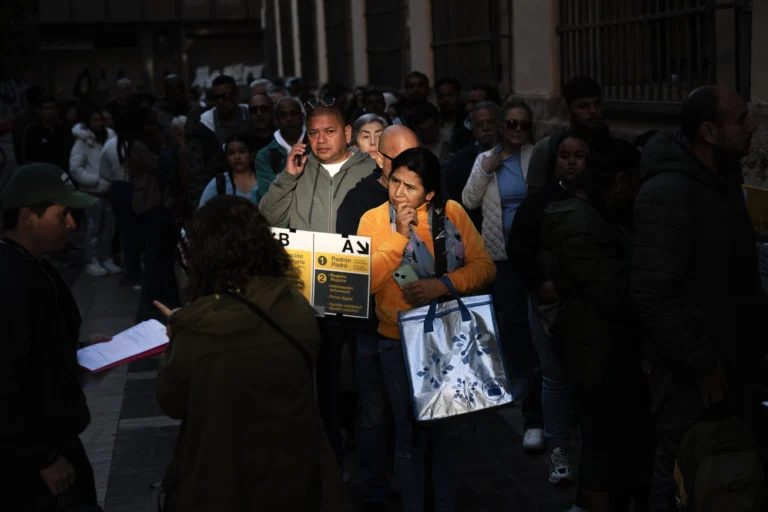
Thousands of people came this Monday to the offices authorized to start the regularization process, in a day divided between the hope of obtaining rights and criticism for the exclusion of stateless. Photo: EFE.
April 20, 2026 Hour: 4:01 pm
🔗 Comparte este artículo
This Monday marked the official commencement throughout Spain’s territory of an extraordinary regularization process designed for migrant individuals.
Spain launched an extraordinary regularization process for migrant individuals today, April 20, facilitating work and residency permits for thousands who arrived before January 1, 2026, aiming to integrate them formally into the nation’s social and economic fabric, though the exclusion of stateless people sparked immediate controversy among advocacy groups. This measure represents a significant step towards legal inclusion for a substantial segment of the population.
This critical measure seeks to formally integrate thousands of citizens who already reside in the country, contributing to its diverse society and economy.
The procedure began with the opening of prior appointment slots for in-person applications at Social Security offices and various authorized Post Office locations, where applicants are required to submit their documentation to qualify for fundamental rights.
Text reads: “Open the deadline to request an appointment for the extraordinary regulation process. The obtained authorization will give the right to work in any sector and place of the country for one year.”
To be eligible for this crucial benefit, interested individuals must prove their continuous stay in Spain since before January 1, 2026. Additionally, they need to demonstrate a minimum permanence of five months, which confirms their deep roots and integration within Spanish society. Beyond continuous residency, the Executive mandates the absence of any criminal records, an indispensable prerequisite for granting the permits that will guarantee legal access to the labor market and the possibility of long-term residency, providing stability and security.
While Spain has previously undertaken similar regularization processes under former administrations, such as those led by José María Aznar (1996-2004) and José Luis Rodríguez Zapatero (2004-2011), this current initiative distinguishes itself through its explicit focus on addressing and stabilizing the prevailing social reality. The acquisition of these essential documents will empower the migrant population to emerge from the informal, “submerged” economy, thereby granting them full legal guarantees. This will not only improve their individual circumstances but also significantly strengthen the base of contributors to the Social Security system, benefiting the entire nation.
Sahrawis Excluded
However, the initiation of this process has been immediately overshadowed by considerable controversy, largely due to the explicit exclusion of stateless people from its legal framework. This particular decision has ignited profound indignation among numerous migrant groups and various associations dedicated to solidarity with the Saharan people. These organizations vociferously denounce that this specific collective once again finds itself in an administrative limbo, despite their long-standing and historical presence within the country, highlighting a persistent vulnerability.
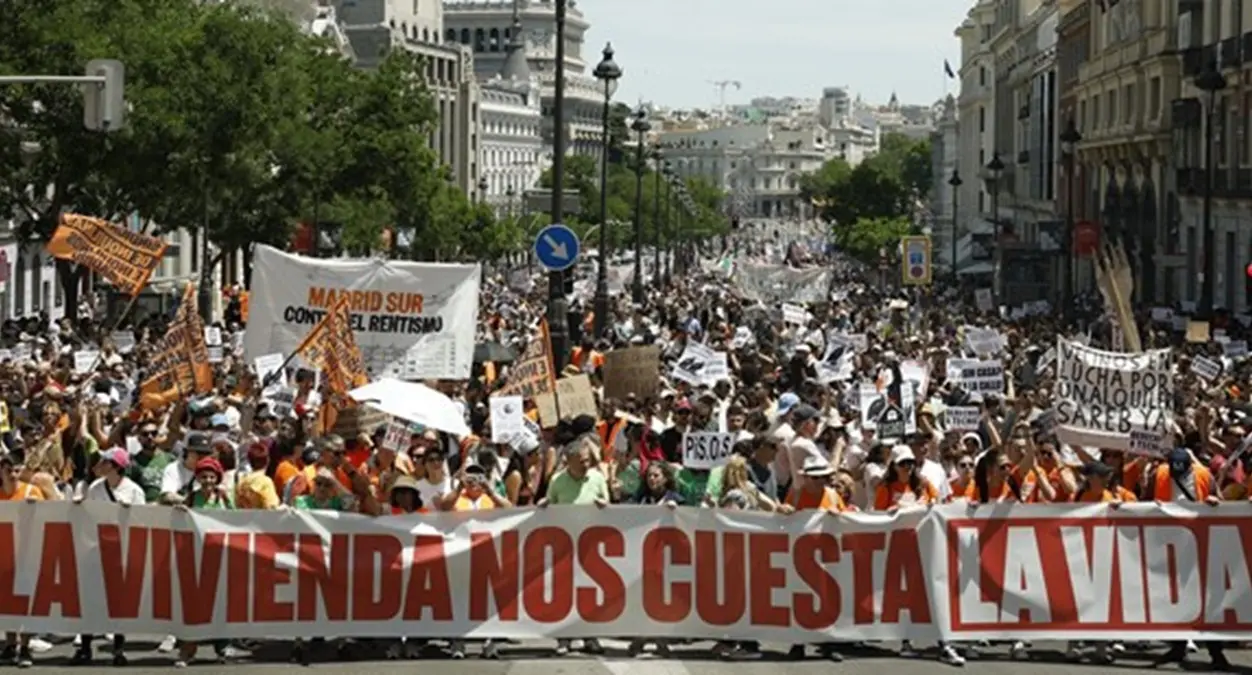
The discontent and frustration of these associations have been vividly demonstrated through a series of symbolic protests staged in front of various governmental offices. During these demonstrations, they critically highlighted that the measure, despite its positive intentions, is not universal in its application. They adamantly argue that deliberately excluding Sahrawis and other stateless individuals fundamentally contradicts the very spirit of social justice that the Government claimed to champion with the implementation of this regularization. Consequently, they view the initiative as incomplete and deeply flawed for deliberately ignoring a reality of extreme vulnerability.
The reception of these applications is scheduled to continue over the next several months, operating under the strict supervision and close monitoring of both migratory and labor authorities. While the Government resolutely defends the technical efficacy of its plan, asserting that it will effectively revitalize the national economy by integrating more workers formally, the broader public debate concerning the comprehensive inclusion of all displaced sectors within Spanish society remains vibrantly open and unresolved on the national agenda, promising continued discussion and advocacy.
Author: Laura V. Mor
Source: Agencies